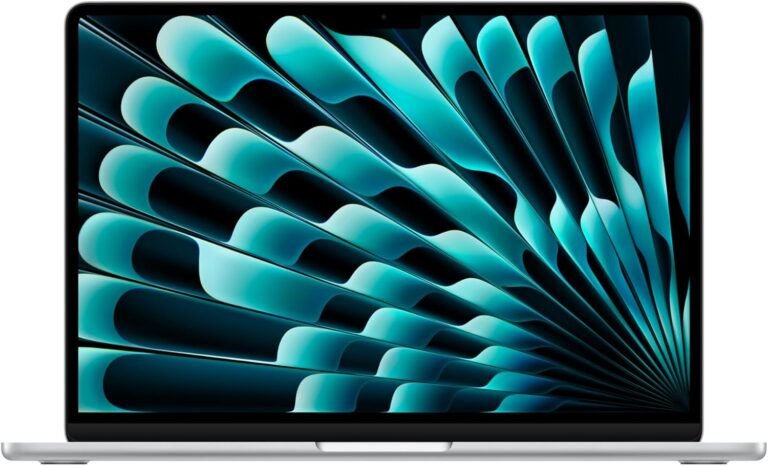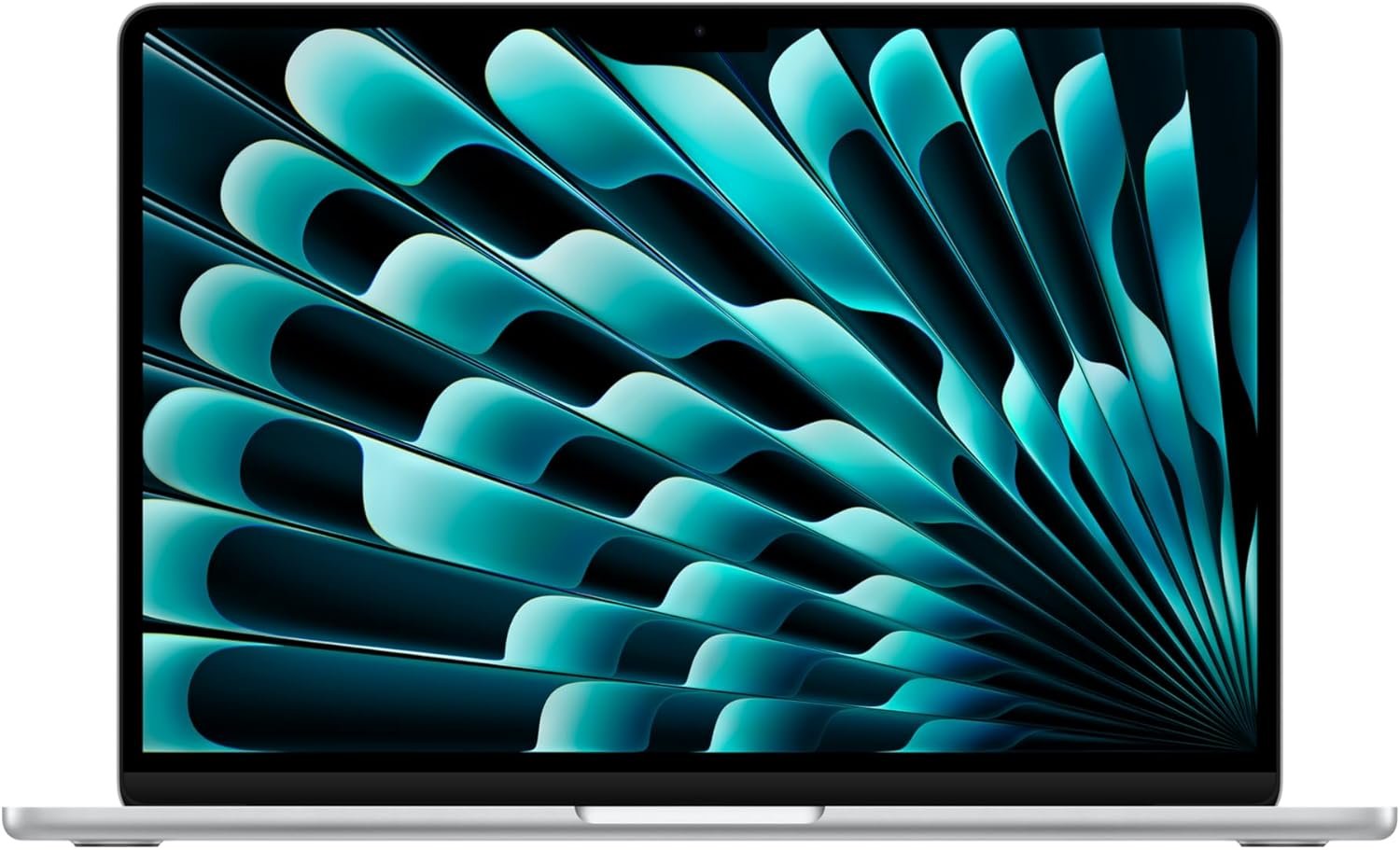
Built for Apple Intelligence | 13.6-inch Liquid Retina Display | 16GB Unified Memory | 256GB SSD | 12MP Center Stage Camera | Touch ID | Silver
The Apple 2025 MacBook Air 13-inch with M4 chip continues the evolution of Apple’s thin-and-light notebook lineup by combining compact portability with advanced silicon architecture. Designed for efficiency, intelligent computing, and seamless integration within the Apple ecosystem, this configuration features 16GB of unified memory, 256GB of SSD storage, a 13.6-inch Liquid Retina display, and a 12MP Center Stage camera—all housed in a lightweight aluminum enclosure finished in Silver.
This article provides a detailed overview of the hardware design, internal architecture, display technology, AI capabilities, connectivity, security features, and practical use cases of this model.
1. Apple M4 Chip: Architecture and Performance Design
At the center of the 2025 MacBook Air 13-inch is the Apple M4 chip, part of Apple’s custom silicon family. The M4 integrates multiple core technologies into a single system on a chip (SoC), including:
- Central processing unit (CPU)
- Graphics processing unit (GPU)
- Neural Engine
- Unified memory controller
- Media engine
- Secure Enclave
This integration reduces latency between components and enhances overall system efficiency.
Hybrid CPU Core Structure
The M4 chip typically utilizes a hybrid design:
- Performance cores for demanding workloads
- Efficiency cores for lightweight background processes
This structure enables dynamic power management. Intensive operations—such as compiling code or exporting media—can activate performance cores, while everyday tasks—such as browsing or document editing—rely on efficiency cores to conserve battery life.
Unified Memory Architecture (UMA)
This configuration includes 16GB of unified memory, shared across CPU, GPU, and Neural Engine. Instead of separate memory pools, all processing units access the same high-bandwidth memory.
Benefits of unified memory include:
- Reduced data duplication
- Faster access between components
- Improved multitasking efficiency
- Enhanced graphics performance
- Better responsiveness in AI workloads
For many productivity and creative workflows, 16GB provides flexibility for running multiple applications simultaneously.
2. Built for Apple Intelligence
The 2025 MacBook Air 13-inch is designed to support Apple Intelligence features. These AI-driven capabilities leverage the Neural Engine within the M4 chip to process machine learning tasks efficiently.
Neural Engine Acceleration
The Neural Engine supports:
- Natural language processing
- Smart text suggestions
- Image analysis
- AI-assisted photo enhancement
- Intelligent search indexing
- Contextual system suggestions
Because many operations are processed on device, this approach can enhance responsiveness while maintaining privacy.
AI in Everyday Workflows
Apple Intelligence features may contribute to:
- Smart document editing
- Automated summarization tools
- Enhanced search results
- Context-aware reminders
- Advanced Spotlight indexing
By combining software optimization with specialized hardware, the MacBook Air supports modern AI-driven productivity tools.
3. 13.6-Inch Liquid Retina Display
The 13.6-inch Liquid Retina display is designed to deliver sharp visuals and color accuracy in a compact form factor.
Display Characteristics
Liquid Retina technology offers:
- High pixel density for crisp text
- Wide color (P3) support
- High brightness levels
- True Tone support (adaptive color temperature)
These characteristics make the display suitable for:
- Writing and research
- Photo editing
- Graphic design projects
- Video playback
- Presentation creation
The slightly taller display aspect ratio provides additional vertical space, improving usability when viewing documents or web content.
Color and Visual Accuracy
Wide color support allows for richer reds and greens compared to standard sRGB displays. This is beneficial for users working with visual media who require consistent color representation.
4. Compact and Lightweight Design
The MacBook Air 13-inch maintains Apple’s thin aluminum unibody construction.
Portability
Key design attributes include:
- Slim profile
- Lightweight build
- Durable aluminum chassis
- Minimalist aesthetic
The compact size makes it suitable for travel, commuting, and remote work environments.
Silver Finish
The Silver finish offers a clean, professional appearance. The anodized aluminum surface contributes to structural durability while maintaining a refined look.
5. 16GB Unified Memory: Multitasking Capabilities
With 16GB of unified memory, the MacBook Air 13-inch is equipped to handle a variety of multitasking scenarios.
Common multitasking environments may include:
- Multiple browser tabs
- Office applications
- Video conferencing
- Light media editing
- Cloud-based collaboration tools
Because unified memory is shared across processing units, performance remains consistent even when switching between apps.
For users working with moderate creative tasks or development tools, 16GB provides additional flexibility compared to entry-level configurations.
6. 256GB SSD Storage
This configuration includes a 256GB solid-state drive (SSD).
SSD Advantages
Solid-state storage provides:
- Fast boot times
- Quick application launches
- Reduced file loading delays
- Silent operation
- Increased durability compared to mechanical drives
Users who manage larger media libraries may supplement internal storage with external drives or cloud services.
7. 12MP Center Stage Camera
The 12MP Center Stage camera enhances video communication experiences.
Center Stage Functionality
Center Stage uses machine learning to:
- Automatically adjust framing
- Keep subjects centered
- Adapt to movement during video calls
This is particularly useful for:
- Remote meetings
- Virtual classes
- Online collaboration
- Content creation
The higher resolution sensor improves clarity and detail compared to earlier camera generations.
8. Audio System and Microphones
The MacBook Air 13-inch integrates a multi-speaker sound system and advanced microphones.
Speaker System
Features may include:
- Balanced stereo output
- Clear dialogue reproduction
- Support for spatial audio (where compatible)
Microphone Array
The microphone system is designed to:
- Reduce background noise
- Enhance vocal clarity
- Support professional video calls
Together, these features contribute to improved communication quality.
9. Keyboard, Trackpad, and Touch ID
Magic Keyboard
The Magic Keyboard offers:
- Comfortable key travel
- Backlit keys
- Responsive typing feedback
This makes the device suitable for extended writing sessions and professional workloads.
Force Touch Trackpad
The large trackpad supports:
- Multi-touch gestures
- Pressure-sensitive input
- Smooth cursor control
Gestures simplify navigation within macOS.
Touch ID
Touch ID enables secure authentication for:
- Logging into macOS
- Authorizing purchases
- Accessing password managers
- Approving secure applications
Biometric authentication enhances convenience and security.
10. Connectivity and Ports
The MacBook Air 13-inch typically includes:
- Thunderbolt / USB-C ports
- MagSafe charging port
- 3.5mm headphone jack
Thunderbolt ports support:
- High-speed data transfer
- External displays
- Docking solutions
- External storage devices
Wireless connectivity includes Wi-Fi and Bluetooth support for stable networking and accessory pairing.
11. Fanless Cooling System
Like previous MacBook Air models, the 2025 13-inch version uses a fanless cooling design.
Benefits of Fanless Design
- Silent operation
- Reduced mechanical components
- Slim internal layout
- Energy efficiency
The M4 chip’s efficiency enables stable performance for typical productivity and creative tasks without active cooling.
12. Battery Efficiency
Apple Silicon chips are designed with performance-per-watt optimization in mind. The M4 chip dynamically manages power allocation to balance speed and energy conservation.
Battery life depends on:
- Screen brightness
- Application usage
- Background processes
- Network activity
For everyday productivity tasks, the MacBook Air is engineered to support extended unplugged use.
13. macOS Optimization
The MacBook Air runs macOS, optimized specifically for Apple Silicon.
Software Integration
Key advantages include:
- Fast app launches
- Efficient memory management
- Secure system updates
- Native support for Apple Silicon apps
Ecosystem Continuity
For users with other Apple devices, integration features may include:
- AirDrop
- Handoff
- Universal Clipboard
- iMessage synchronization
This ecosystem synergy enhances workflow continuity across devices.
14. Security and Privacy
Security features integrated into the MacBook Air include:
- Secure Enclave for encryption
- Touch ID authentication
- Encrypted storage
- Privacy-focused system controls
On-device AI processing contributes to privacy by reducing reliance on external servers for certain tasks.
15. Practical Use Cases
Students
- Research and writing
- Video lectures
- Collaborative projects
- Presentation creation
Remote Professionals
- Video conferencing
- Document editing
- Data analysis
- Cloud-based collaboration
Content Creators
- Photo editing
- Short-form video production
- Social media content management
- Graphic design
Developers
- Coding environments
- Lightweight simulation tasks
- Web development workflows
16. Environmental Considerations
Apple continues to incorporate recycled materials and energy-efficient components into its product design strategies. The aluminum enclosure and efficient chip architecture align with broader sustainability initiatives.
17. Key Specifications Overview
- Apple M4 chip
- 13.6-inch Liquid Retina display
- 16GB unified memory
- 256GB SSD storage
- 12MP Center Stage camera
- Touch ID
- Fanless design
- Silver finish
Conclusion
The Apple 2025 MacBook Air 13-inch with M4 chip combines compact portability with advanced silicon architecture and AI-ready capabilities. With 16GB of unified memory, a high-resolution Liquid Retina display, integrated Apple Intelligence support, and a refined aluminum design, it is structured to support modern productivity, creative workflows, and everyday computing needs.
Its fanless construction, energy-efficient chip design, and deep macOS integration reflect Apple’s continued emphasis on performance optimization, system cohesion, and intelligent on-device processing.
This overview highlights the hardware, system architecture, and practical applications of the 2025 13-inch MacBook Air configuration, providing a comprehensive understanding of its capabilities and design focus.
About the Author